
Clear Warning Signs Your Deck Needs Fresh Protection
If your deck looks faded, feels rough, or no longer repels water, it is likely time to restain it. Most decks need new stain every two to three years, but weather, sun, and foot traffic can shorten that time. Watching for early signs helps you protect the wood before damage gets worse.
Why Prevention Matters
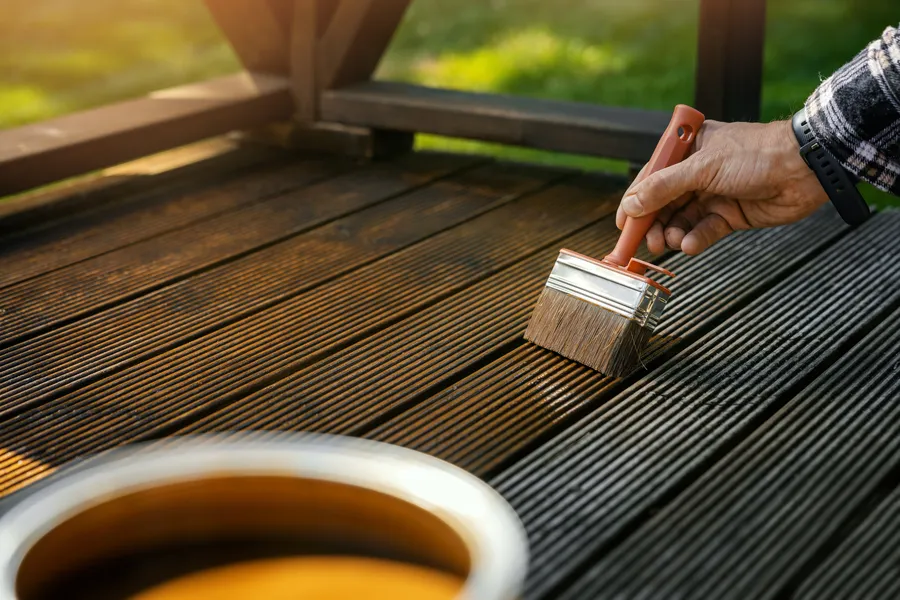
Your deck faces sun, rain, snow, and changing temperatures all year. Without proper deck staining, wood can crack, warp, or rot. A fresh coat of stain protects the surface and helps it last longer. Prevention costs less than replacing boards or rebuilding part of the structure.
When you restain at the right time, you protect your investment and keep your outdoor space safe for family and friends.
Early Warning Signs
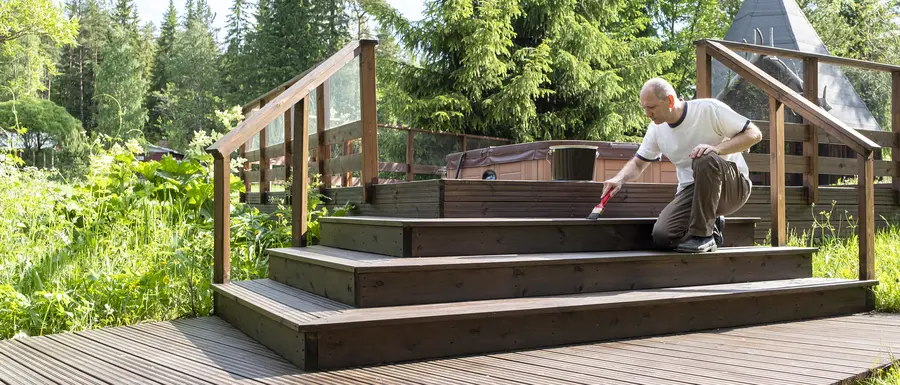
Small changes in your deck’s appearance often show up before major damage happens. Catching these signs early makes the project easier.
- Color looks faded or washed out
- Water no longer beads on the surface
- Wood feels rough or splintered
- Dark spots or mildew appear
- Stain is peeling or flaking
A simple water test works well. Pour a small amount of water on the deck boards. If the water soaks in within a few minutes instead of forming beads, the protective layer is wearing off. That means it is time to plan for new deck staining.
Seasonal or Routine Checklist
Checking your deck a few times a year helps you stay ahead of problems. Spring and fall are great times for a quick inspection.
- Sweep off dirt and leaves.
- Look for loose or raised nails and screws.
- Check for cracked or split boards.
- Inspect railings and stairs for soft spots.
- Test a small area with water.
If you notice fading or water soaking in, add restaining to your to-do list. In many areas, late spring or early fall offers good weather for this project. Mild temperatures help the stain dry evenly.
Best Practices for Long-Term Results
Proper prep work makes a big difference. Before applying new stain, the deck should be cleaned well. Dirt, old stain, and mildew can block the new coat from bonding to the wood.
Pressure washing is common, but it must be done carefully. Too much pressure can damage the wood fibers. After washing, the deck needs time to dry fully. Staining damp wood can trap moisture and lead to peeling later.
Choose a stain made for exterior wood surfaces. Some stains are clear, while others add color. A semi-transparent option often gives a balance of protection and natural wood look. Applying an even coat and following drying times helps the finish last longer.
What Not to Do
Many homeowners wait too long. They may think a little fading is only cosmetic. Over time, though, UV rays break down the wood fibers. Once boards start to crack or rot, staining alone will not fix the issue.
Avoid layering new stain over peeling or thick old stain without prep work. This often leads to uneven color and early failure. Skipping cleaning or rushing drying time can also shorten the life of the new finish.
Do not ignore small problem areas. A few soft boards today can turn into larger repairs next season.
When to Schedule Professional Help
If your deck has large areas of peeling stain, deep cracks, or signs of rot, it may be time to call a professional. Bigger decks or multi-level structures can also be hard to handle alone.
A trained team can inspect the structure, replace damaged boards, and complete deck staining the right way. This saves time and helps protect the wood for years to come.
Protect Your Deck Before Damage Spreads
If your deck in Sioux City, IA is showing signs of wear, we can help you decide the next steps. At Moore Bros Painting Inc, we inspect the surface, repair damaged areas, and apply high-quality deck staining for long-lasting protection. Call us at (712) 277-0173 to schedule a service visit and let us help you keep your outdoor space looking its best.